
CATEGORYSaaS
ROLEProduct Designer
CLIENTYEARAmazon Web Services
2023
AWS Supply Chain, introduced at AWS re:Invent 2022, is a cloud application that unifies supply-chain data and delivers ML-driven insights, built-in collaboration, and demand planning. Unlike typical solutions, it is visual, comprehensive, and easy to use.
As a founding designer, I delivered the core experience including onboarding, dashboard, settings, roles, and permissions. We created a new design system for the app. Initial setup uses the AWS Management Console and Cloudscape 2.0 which underwent review processes from AWS’s internal review team.
The project began as an initiative under internal name “Galaxy” and launched publicly as AWS Supply Chain, which continues to expand.

Users begin at the application's AWS Management Console homepage to launch their first instance.
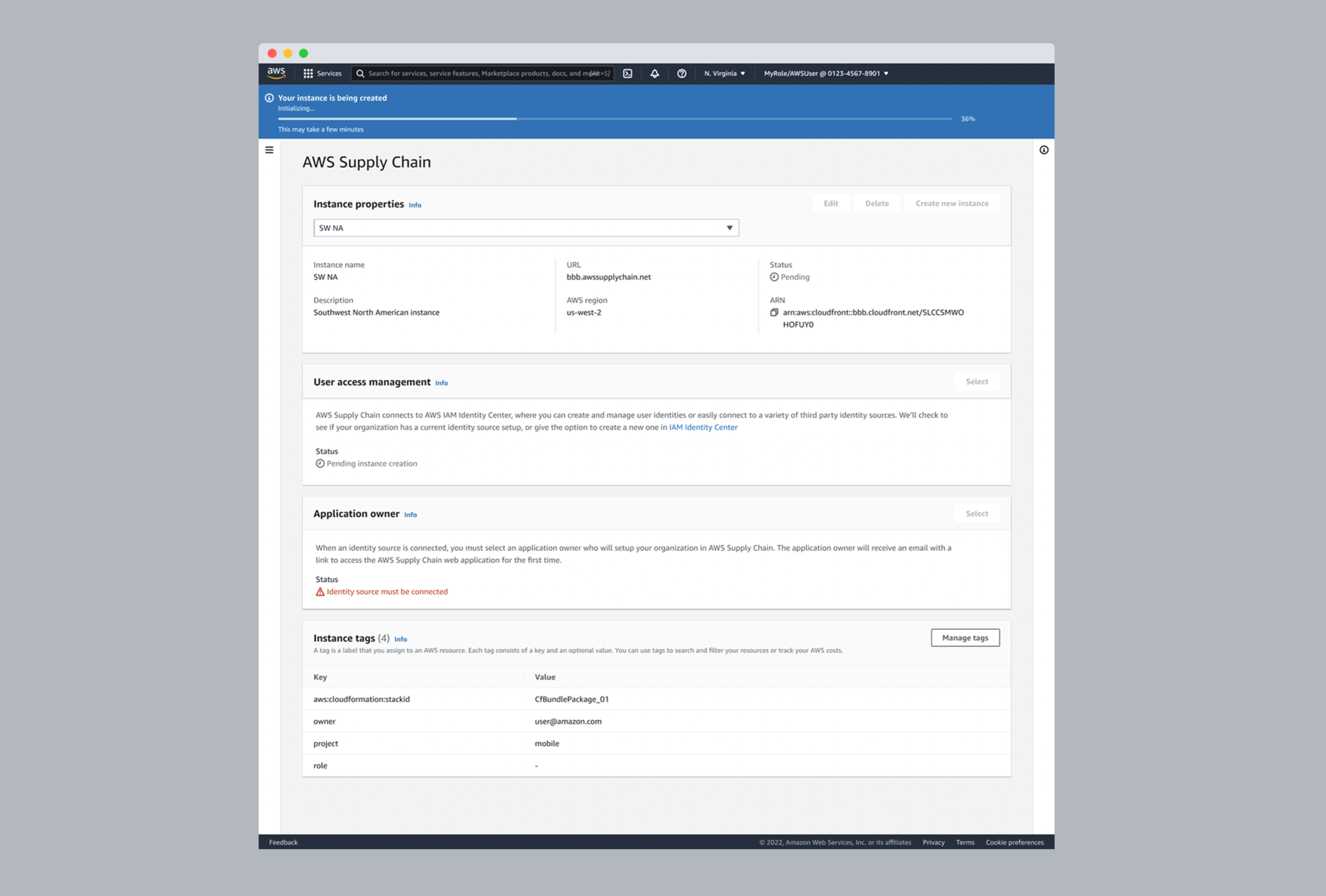
Once created, the instance details page allows administrators to manage the instance properties, view current status and health, add or remove users, and create and assign tags. Tags can be created for location, teams, or organizations, for example, to help categorize and filter.
Once the instance is set up and users are added (manually or imported from an existing UMS), administrators proceed to configure the application. Starting with personal details, the admin completes their profile information such as name, contact details and preferred settings, next they populate company information, finally they define user roles and permissions, assigning appropriate access levels and responsibilities, with the ability to adjust permissions as the organization evolves.
Each admin or user who is invited receives a unique link and proceeds through the identical onboarding workflow, based on their role.

After onboarding, users land on the homepage where call-to-action cards guide them through the next setup steps.
The dashboard presents configurable cards or widgets tailored to each user’s role, surfacing the most relevant insights, notifications, and quick actions at a glance. Users can rearrange, add, or remove widgets as needs evolve.


Role management can be tricky, especially within supply chain where many factors must be considered. Our solution was to allow fully customizable roles created and managed by an admin.
Admins can define role templates, adjust privileges per user or group, and apply changes globally from the Console or by instance, ensuring compliance, reducing errors, and simplifying audits.
